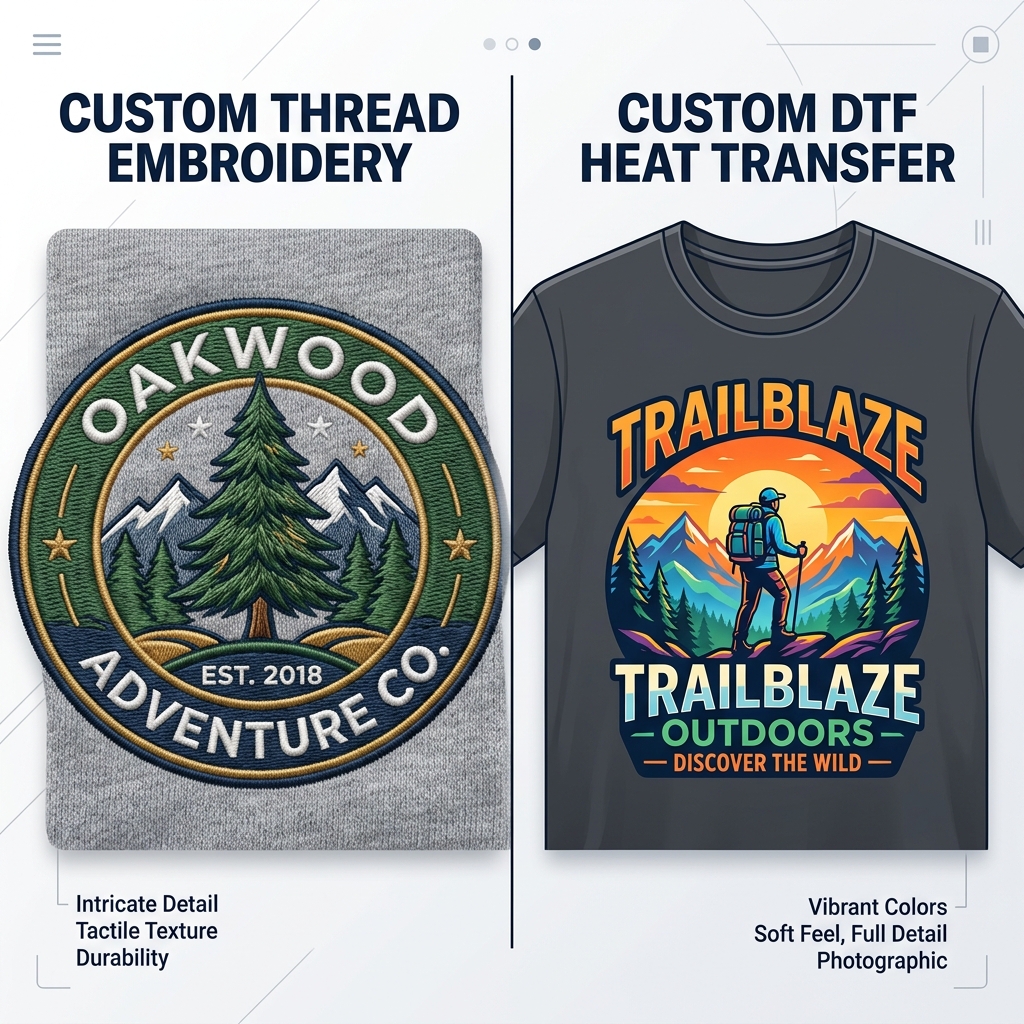
Selecting the ideal customization method for your branded apparel can feel overwhelming. With choices ranging from traditional techniques to cutting-edge digital transfers, the decisions you make directly impact the aesthetics, texture, longevity, and overall cost of your project.
At mymytee, we utilize two industry-leading technologies: Precision Embroidery and Direct-to-Film (DTF) Heat Transfers. While both customization options deliver stunning outcomes, they serve different design formats and textile types. In this comprehensive guide, we compare these methods head-to-head to help you choose the best fit for your next project.
1. Understanding the Craft: Precision Embroidery
Embroidery is a classic textile branding technique where designs are stitched directly into the garment fabric using colored threads. Before a design is embroidered, it must undergo a digital optimization process known as digitizing. In digitizing, a vector logo is converted into paths, stitch angles, and densities that industrial embroidery machines can read.
We use high-tensile polyester and rayon threads that give a dimensional, elevated, and slightly glossy texture. The threads literally become integrated into the fabric grid, ensuring that the design remains intact for the entire lifetime of the garment.
Ideal Use Cases for Embroidery:
- Corporate and professional polo shirts
- Structured baseball caps and beanies
- Left-chest logo placement on heavy hoodies and canvas jackets
- Durable workspace uniforms and outerwear
2. Understanding the Science: Direct-to-Film (DTF) Transfers
Direct-to-Film (DTF) printing is a relatively new digital customization revolution. Instead of printing directly onto the fabric, the artwork is printed in reverse onto a special PET release film using specialized textile inks. After printing, a hot-melt adhesive powder is applied and cured in a heating tunnel. Once cured, the design sheet is placed on the apparel and fused using an industrial heat press under high pressure.
DTF offers a smooth, ultra-thin, and slightly rubberized finish. Because it is a digital printing method, there are no limitations on gradients, complex shadows, small typographic details, or photographic color palettes.
Ideal Use Cases for DTF Transfers:
- Large full-chest graphics on lightweight t-shirts
- Photorealistic artwork, merchandise lines, and street wear designs
- Intricate typography with fine serifs and multi-color shadows
- Synthetic sports jerseys, windbreakers, or raincoats
💡 Quick Summary Comparison
Embroidery excels in durability, premium corporate aesthetics, and fabric textures, but is limited to simple graphics and thick garments. DTF Heat Transfers excel in photorealistic color reproduction, small graphic details, and lightweight print feelings, but require gentle washing care over years.
3. Head-to-Head: Durability & Care Comparison
When it comes to durability, Embroidery is the undisputed winner. Because threads are physically woven into the fabric, the design will not peel, crack, or fade. It can withstand industrial laundering, bleaching, and high-heat drying cycles. It is built to last as long as the garment itself.
DTF Transfers offer excellent durability compared to older vinyl technologies, generally resisting cracking and fading for 50+ wash cycles. However, because the design is a thermal adhesive layer on top of the fabric, it is susceptible to extreme heat. Ironing directly over a DTF print will melt the adhesive, and hot wash cycles will shorten its lifespan.
4. Design Complexity & Color Restraints
If your logo contains complex gradients, photorealistic faces, or glowing neon drop shadows, DTF is your only viable path. DTF prints at 1440 DPI using CMYK color channels plus a solid white base layer, meaning it reproduces high-fidelity artwork exactly as it appears on your computer screen.
Embroidery, by contrast, relies on a palette of physical thread spools. Complex color transitions must be simulated by overlapping stitch patterns, which can look bulky. Additionally, tiny text (smaller than 0.2 inches high) is extremely difficult to embroider clearly because the needle puncture density becomes too high, causing the fabric to pucker or tear.
5. Final Verdict: Which Should You Choose?
Choose Embroidery if you want to project a professional, premium corporate image, or if you are personalizing thick materials like hats, heavy fleece, or canvas. It creates a classic, tactile look that screams premium quality.
Choose DTF transfers if you have vibrant, colorful streetwear designs, complex artwork, or want a soft, lightweight print on t-shirts.
At mymytee, our online 2D studio editor allows you to preview both styles in real-time. Head over to our Custom Design Studio to start experimenting with your graphics!